Phase 03 - Create
Phase 03 - Create
Corporate Design:
Down to the last document.
Corporate design is identity in use. We translate the CI and the design system into every format the brand appears in: presentations, stationery, print, signage, digital assets. Held to the same standard as the brand itself, right down to a three-page proposal document.
Corporate design is identity in use. We translate the CI and the design system into every format the brand appears in: presentations, stationery, print, signage, digital assets. Held to the same standard as the brand itself, right down to a three-page proposal document.
Definition line
Corporate design is the visual appearance of a company: logo, colour and typography, and how they are applied to everything the brand appears in. This is about the application. The foundations are built in the corporate identity.
Corporate design is the visual appearance of a company: logo, colour and typography, and how they are applied to everything the brand appears in. This is about the application. The foundations are built in the corporate identity.
Corporate design is the visual appearance of a company: logo, colour and typography, and how they are applied to everything the brand appears in. This is about the application. The foundations are built in the corporate identity.
Scope
What is included


Problem List
This is for you if
Every deck looks different.
Sales, engineering and management each build their own slides, and the client sees three companies in one meeting.
Templates exist, but nobody sticks to them.
Because the template cannot do what is needed, everyone builds their own, and that is the one in circulation.
In print it looks different from on screen.
Colours shift, fonts are missing, and the printer calls two days before the deadline.
Your proposal is the first impression and a Word file.
You sell quality and send a document that visibly got put together on the side.
Reference

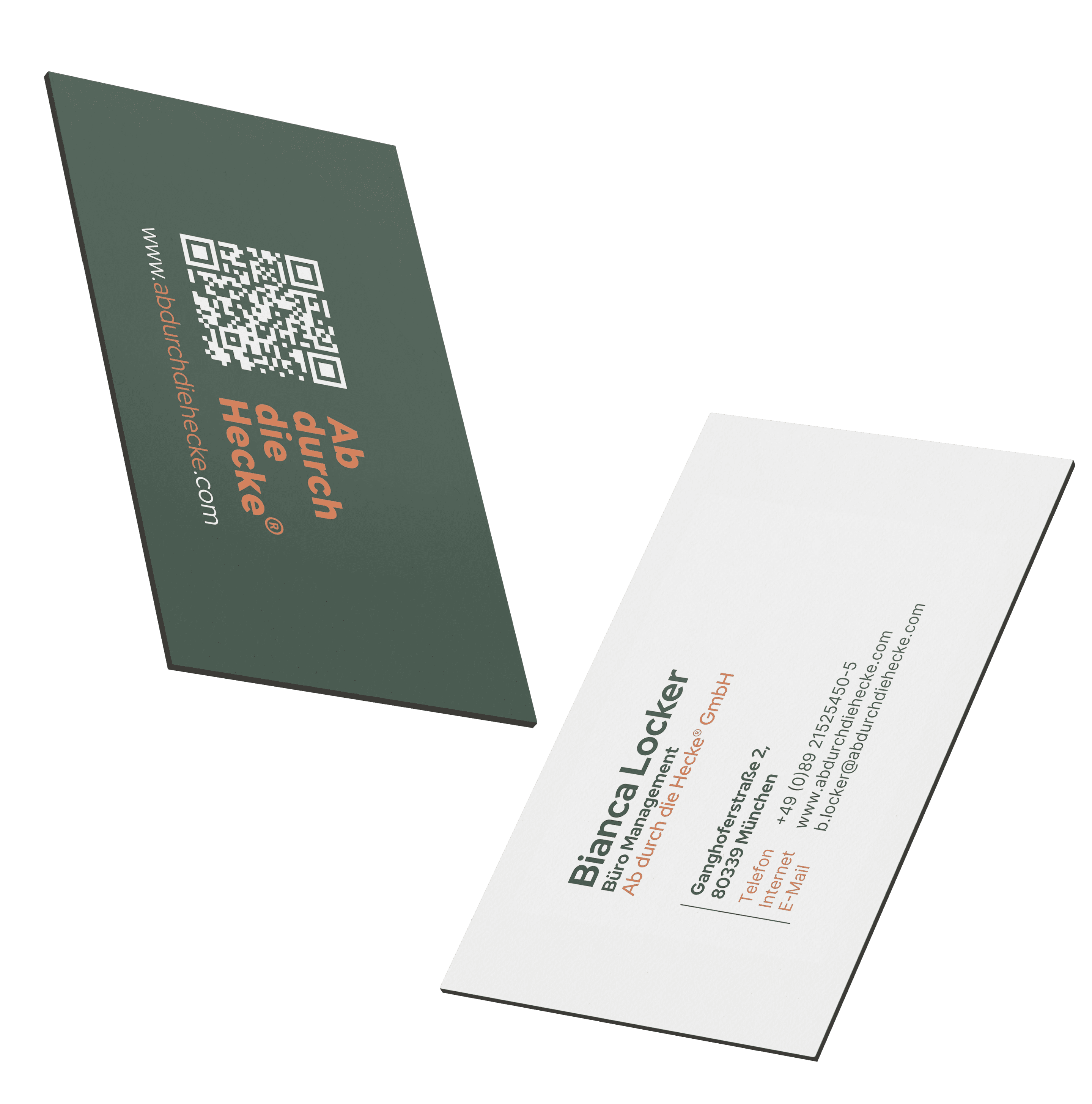
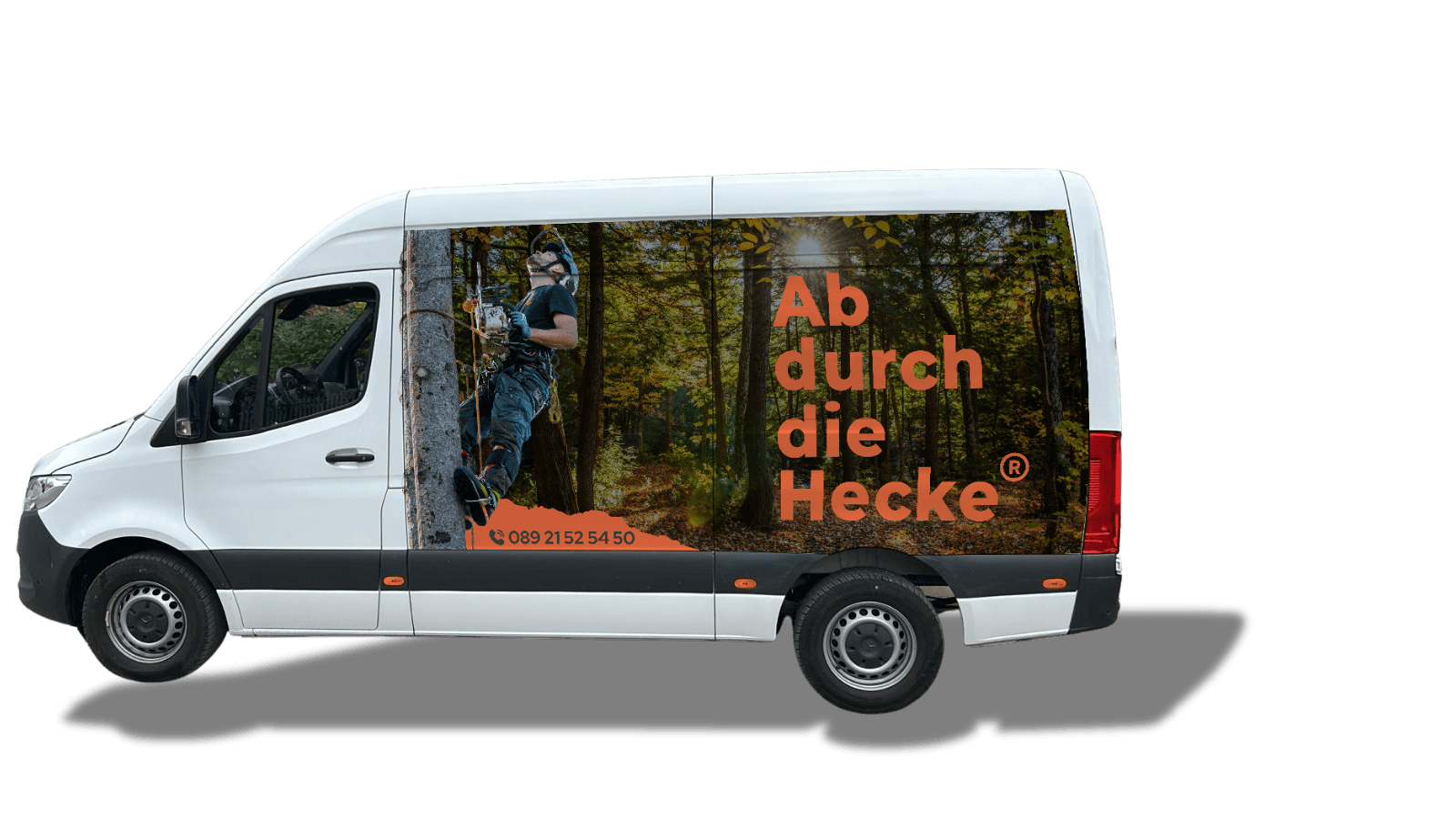
What that looked like at Ab durch die Hecke.
What that looked like at Ab durch die Hecke.
A look that works on paper and on the vehicle, without every piece being decided from scratch.
A look that works on paper and on the vehicle, without every piece being decided from scratch.
From the business card to the vehicle livery: flyers, stationery and the vehicle designs, all built from the same rules. The print files came from us; printing and application happened locally.
From the business card to the vehicle livery: flyers, stationery and the vehicle designs, all built from the same rules. The print files came from us; printing and application happened locally.
Stationery & Print
Graphic Design
Digital Asset Pruduction
"A brand is not judged by its logo but by the proposal you sent out last week."
"A brand is not judged by its logo but by the proposal you sent out last week."
"A brand is not judged by its logo but by the proposal you sent out last week."





Our creative stack!
Behind every seamless experience is a powerful set of tools. We use the best-in-class platforms to design, collaborate, test, and launch user-first websites that don’t just look good also perform brilliantly.

Frequently Asked
Frequently Asked
Questions
Questions
What is corporate design?
Corporate design is the visual appearance of a company: logo, colour and typography, and their application to everything the brand appears in, from a business card to a deck to signage.
The term covers both the constants and their application. We split it into two steps, because in practice they are two different jobs. Setting the constants is a decision of principle, made once. Applying them to forty formats is craft, and it looks different every time. Mixed into one project, you end up discussing the brand colour and a page margin in the same meeting, and the margin wins, because it is more concrete. The difference shows in the output too.
The first step produces a document; the second produces files someone opens on Monday and uses. Textbooks call both corporate design, while in practice almost everyone means only one of the two, usually whichever they happen to need.
Framer is a web builder for creative pros. Be sure to check out framer.com to learn more.
Corporate design is the visual appearance of a company: logo, colour and typography, and their application to everything the brand appears in, from a business card to a deck to signage.
The term covers both the constants and their application. We split it into two steps, because in practice they are two different jobs. Setting the constants is a decision of principle, made once. Applying them to forty formats is craft, and it looks different every time. Mixed into one project, you end up discussing the brand colour and a page margin in the same meeting, and the margin wins, because it is more concrete. The difference shows in the output too.
The first step produces a document; the second produces files someone opens on Monday and uses. Textbooks call both corporate design, while in practice almost everyone means only one of the two, usually whichever they happen to need.
What is the difference from corporate identity?
The corporate identity defines how the brand looks and what it stands for. Corporate design applies it. If you have no logo and no colour system yet, you start with the identity, not here.
The honest answer is that the literature cuts the two terms differently from everyday usage. Gabler treats corporate design as the visual appearance in service of the identity, meaning both together. For a proposal, though, the terminology is secondary.
What matters is whether something is already settled that we can follow. If it is, you are in the right place. If not, starting here costs you money, because every application then triggers a discussion of principle. A simple check: is there a document at your company that says which colour applies where and which typeface in which size? If yes, come here. If no, or if nobody can find it, start one step earlier. We say so in the first conversation, because it is the difference between a calm project and a slow one.
Framer is a web builder for creative pros. Be sure to check out framer.com to learn more.
The corporate identity defines how the brand looks and what it stands for. Corporate design applies it. If you have no logo and no colour system yet, you start with the identity, not here.
The honest answer is that the literature cuts the two terms differently from everyday usage. Gabler treats corporate design as the visual appearance in service of the identity, meaning both together. For a proposal, though, the terminology is secondary.
What matters is whether something is already settled that we can follow. If it is, you are in the right place. If not, starting here costs you money, because every application then triggers a discussion of principle. A simple check: is there a document at your company that says which colour applies where and which typeface in which size? If yes, come here. If no, or if nobody can find it, start one step earlier. We say so in the first conversation, because it is the difference between a calm project and a slow one.
We have a design system with templates. Isn't that enough?
A design system delivers the template: reusable, empty, with rules. Corporate design delivers the finished piece: this deck, this business card, these print files. You often need both, just not at the same time.
The difference shows the moment something unusual is needed. A template covers the cases that were anticipated. The trade fair stand, the vehicle livery and the anniversary booklet are not in it, and those are exactly the ones that burn time when someone inexperienced rebuilds them. That is what graphic design covers here: the things that cannot be put into a grid. If your system is good and carries the everyday formats, we only do what goes beyond it. That is a smaller project, and we say so rather than making it bigger.
The reverse is just as common: no system exists at all, and yet templates circulate that grew over years. Then the question is not whether we build something new but which of the existing files is the best starting point. We see that in the files themselves, not in the description.
Framer is a web builder for creative pros. Be sure to check out framer.com to learn more.
A design system delivers the template: reusable, empty, with rules. Corporate design delivers the finished piece: this deck, this business card, these print files. You often need both, just not at the same time.
The difference shows the moment something unusual is needed. A template covers the cases that were anticipated. The trade fair stand, the vehicle livery and the anniversary booklet are not in it, and those are exactly the ones that burn time when someone inexperienced rebuilds them. That is what graphic design covers here: the things that cannot be put into a grid. If your system is good and carries the everyday formats, we only do what goes beyond it. That is a smaller project, and we say so rather than making it bigger.
The reverse is just as common: no system exists at all, and yet templates circulate that grew over years. Then the question is not whether we build something new but which of the existing files is the best starting point. We see that in the files themselves, not in the description.
Which formats do we actually need?
The ones that actually leave your company. For most companies that is fewer than the wish list suggests, and the deck and the proposal are almost always at the top, because they get seen most often.
So we do not start with a list, we start with your sent folder and your print archive from the last six months. Whatever appears three times belongs in scope. Whatever appears once usually does not. The most expensive projects are the ones where formats get built because they were on a completeness list, and then sit unused for two years.
What a given project includes depends on scope and is set out in the proposal. An order that almost always holds: first what clients see, then what is needed internally, then what comes up once a year. Start the other way round and after six weeks you have a perfect trade fair graphic and still three different decks in circulation.
Framer is a web builder for creative pros. Be sure to check out framer.com to learn more.
The ones that actually leave your company. For most companies that is fewer than the wish list suggests, and the deck and the proposal are almost always at the top, because they get seen most often.
So we do not start with a list, we start with your sent folder and your print archive from the last six months. Whatever appears three times belongs in scope. Whatever appears once usually does not. The most expensive projects are the ones where formats get built because they were on a completeness list, and then sit unused for two years.
What a given project includes depends on scope and is set out in the proposal. An order that almost always holds: first what clients see, then what is needed internally, then what comes up once a year. Start the other way round and after six weeks you have a perfect trade fair graphic and still three different decks in circulation.
Want to learn more about us? Check out our entire FAQ!
Want to learn more about us? Check out our entire FAQ!
Interested in Content Marketing?
Check out our most recent articles!
Interested in Content Marketing?
Check out our most recent articles!

How Handwerk Businesses Actually Find Azubis: 5 Steps
Finding Azubis and skilled workers in Handwerk: why job ads alone don't work and which five steps actually bring applications.
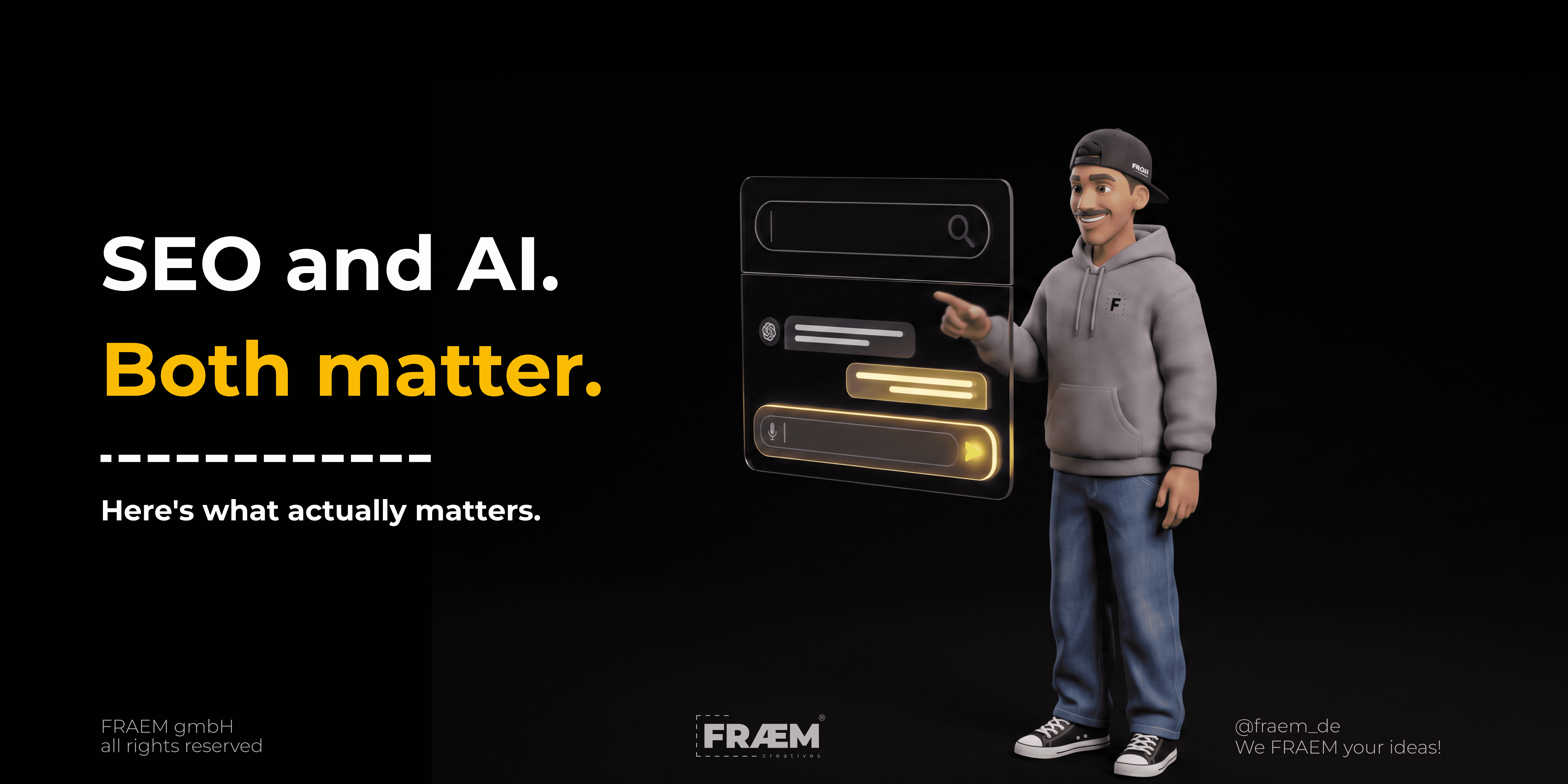
AI Search Is Here. SEO Isn't Dead. Here's What Matters.
43% of Germans use ChatGPT. Search is quietly changing under everyone's feet. Here's what's real, what's hype, and what your business should actually do about it.

Why Your Handwerk Website Isn't Doing Its Job
94% of German Handwerk businesses have a website. Only 3 of 500 audited sites came close to actually doing their job. Here's what "it works for us" is really costing you.

Framer vs. WordPress vs. TYPO3
Framer or WordPress for your Handwerk business? An honest comparison on cost, maintenance, and SEO. Plus when Webflow or TYPO3 actually makes sense.
How Handwerk Businesses Actually Find Azubis: 5 Steps
Finding Azubis and skilled workers in Handwerk: why job ads alone don't work and which five steps actually bring applications.
AI Search Is Here. SEO Isn't Dead. Here's What Matters.
43% of Germans use ChatGPT. Search is quietly changing under everyone's feet. Here's what's real, what's hype, and what your business should actually do about it.
Why Your Handwerk Website Isn't Doing Its Job
94% of German Handwerk businesses have a website. Only 3 of 500 audited sites came close to actually doing their job. Here's what "it works for us" is really costing you.
Framer vs. WordPress vs. TYPO3
Framer or WordPress for your Handwerk business? An honest comparison on cost, maintenance, and SEO. Plus when Webflow or TYPO3 actually makes sense.
Content that converts
(and doesn’t suck).
Let’s talk.
Content that converts
(and doesn’t suck).
Let’s talk.
Content that converts
(and doesn’t suck).
Let’s talk.


Nikkan & Soli Managing Directors
Nikkan & Soli Managing Directors
Nikkan & Soli Managing Directors