Every Fraem project follows the same four phases. Here's why they exist, how they connect, and what happens when you skip the wrong one.


Introduction
We get it. You came here because you need something. A new brand identity, a campaign, a website, content that doesn't make people scroll past it. And you probably want it soon.
Cool. We want that too.
But here's the thing: we've been doing this long enough to know what happens when a project jumps straight to the fun stuff. It looks great for about three weeks. Then someone asks, "Wait, who is this actually for?" and the whole thing unravels like a cheap sweater.
We've sat in those rooms. We've watched beautiful campaigns die in review because nobody could agree on what the brand actually stands for. We've inherited projects where the last round of work left nothing behind. No strategy, no system, no logic. Just a Dropbox folder full of assets and a vague sense of "let's try something different this time."
It's not that anyone did anything wrong. It's that the structure was missing from the start.
That's why every project at Fraem goes through the same four phases. Not because we love process (we're a creative agency, not an accounting firm), but because this process is the reason the work actually works.
We call it The FRÆMWORK™.
01 / EXPLORE
The phase everyone wants to skip.
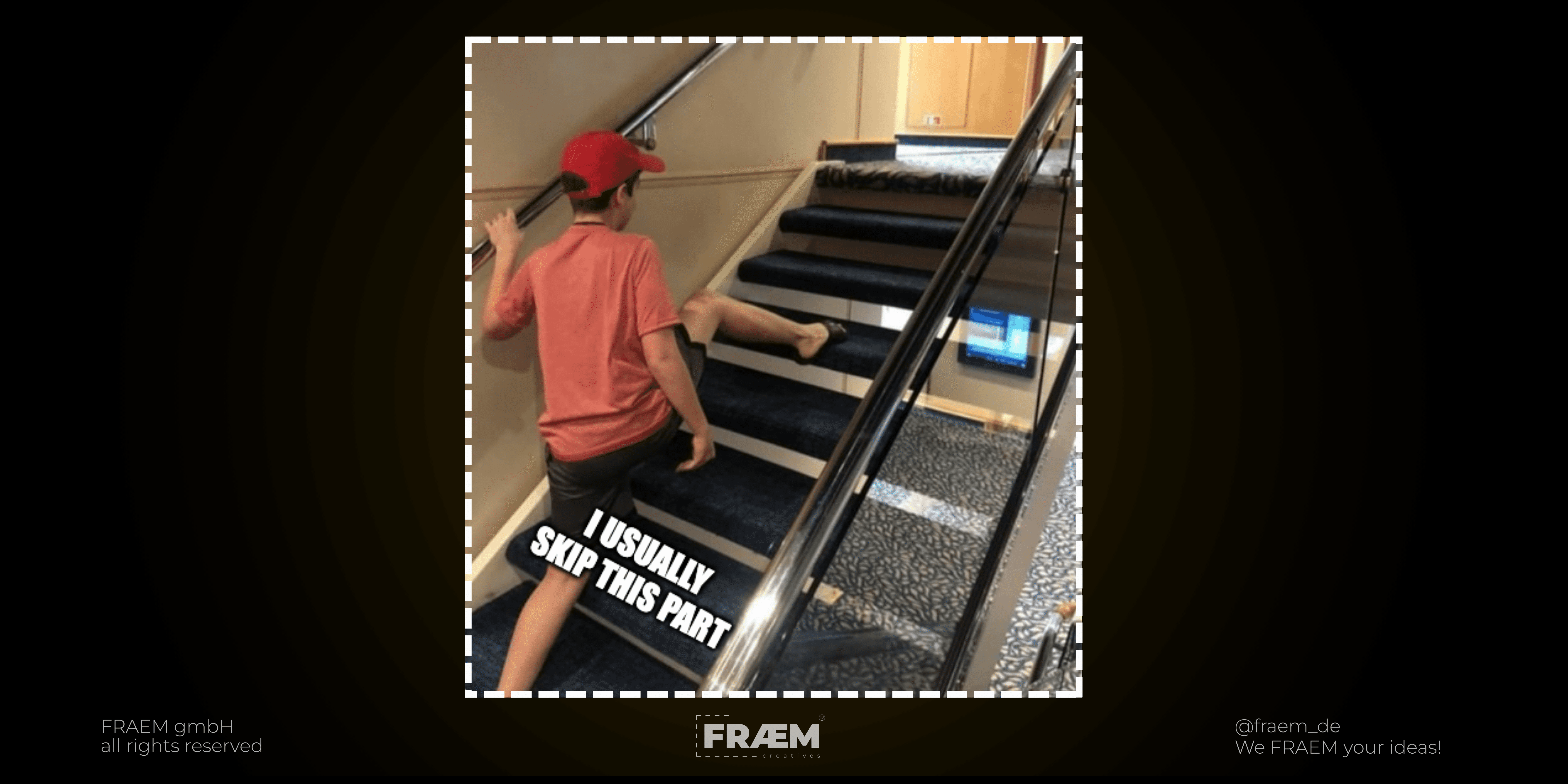
Here's a pattern we've seen more times than we've seen "Let's circle back" in a meeting invite: a brand comes to us with a clear idea of what they need. New visuals. A social media strategy. A website redesign. They've already decided on the solution. They just need someone to execute it.
And honestly? Sometimes they're right.
But sometimes the website isn't the problem. Sometimes the brand doesn't know who it's talking to, or it's saying five different things depending on who you ask, or the positioning that worked three years ago quietly stopped working and nobody noticed.
That's what Explore is for. Not to slow things down, but to make sure we're solving the right problem before we start designing the right solution.
We dig into the brand as it actually exists. Not the version in the pitch deck. The real one. The one your customers experience. We look at how the brand shows up across every touchpoint, who the real competitors are (not just the obvious ones), and where the gaps are that nobody's talking about.
We talk to stakeholders. We challenge assumptions. We ask the kind of questions that make the room go quiet for a second. Like "What would happen if this brand disappeared tomorrow? Who would actually notice?" Not to be dramatic. To find out what's real.
And then we document everything in a way that's actually usable, not a 90-page PDF that gets opened once and lives in someone's Downloads folder forever. The output of Explore is a clear picture of where the brand stands right now, built so every decision after this point has something solid to stand on.
Why it matters: Explore gives your brand an honest external perspective on the problem at hand. Together, we build the foundation for every initiative that follows. Without that foundation, we're all just spending resources on the phases ahead with no guarantee they'll land. And a campaign without a clear foundation isn't bold. It's a bet.
Think of Explore as the GPS before the road trip. You can drive without it. You'll just end up in a parking lot in the middle of nowhere wondering where it all went wrong.
02 / SHAPE
Where "we kind of know what we want" becomes "we know exactly where we're going."
Explore gives us the truth. Shape turns that truth into a direction.
This is the phase where strategy gets specific. We take everything we uncovered in Explore and build the structure the brand will live in. Positioning, messaging, identity foundations, creative direction. The things that make a brand feel like one thing instead of a collection of random touchpoints.
A lot of people think this happens naturally. That if the logo is good and the colors are right, the brand will just... come together. We love that optimism. But no.
A brand without a clear strategic shape is like a playlist on shuffle. Every individual song might be great, but the experience makes no sense. Shape is where we build the tracklist.
We define who the brand is for (and just as importantly, who it's not for). We figure out the positioning that actually holds up when you put it next to the competition. We develop the visual and verbal identity systems that give every piece of communication a reason to exist and a way to connect.
This is also where the brand's personality gets defined. Not in a "pick three adjectives from this list" kind of way. In a "this is how the brand speaks, thinks, and shows up, and here's why" kind of way. Because a brand personality that lives on a mood board and never makes it into the actual work isn't a personality. It's a Pinterest board.
Why it matters: Shape is the phase that separates brands that look good from brands that make sense. Looking good is easy. Making sense while looking good? That's the work.
And here's the part we'll say out loud because nobody else will: strategy that sits in a document nobody opens is not strategy. It's decoration. Everything we build in Shape is designed to be used. In briefs. In creative reviews. In the awkward moment when someone asks, "But why this direction?" and the answer is already written down.
03 / CREATE
The phase you actually came here for. (We know.)
This is the one everyone pictures when they think about working with an agency. The campaigns. The content. The designs. The reels. The websites. The things people actually see.
And honestly? This is the fun part. We're not going to pretend it isn't.
But here's why Create works differently when it follows Explore and Shape: every creative decision has a reason behind it. The campaign concept isn't just "what felt cool in the brainstorm." It's rooted in a positioning that was built on actual insight. The content strategy isn't a guessing game. It's a system designed to reach the right people with the right message in the right format.
That's the difference between content that gets posted and content that gets remembered.
In Create, we build everything the brand needs to show up in the real world. Social media content, websites, campaigns, brand collateral, motion design, whatever the strategy calls for. But every single asset ties back to the work we did in Explore and Shape. Nothing exists in isolation. Nothing is made just because "we need to post something today."
Why it matters: Create without Explore and Shape is just production. It's fast, it's pretty, and it disappears. Create with Explore and Shape is communication that compounds. Every piece builds on the last one. Every campaign leaves something useful behind for the next one.
We've seen brands run on the production treadmill for years. Posting, launching, redesigning, posting again. Never building anything that lasts. Create is the phase where that cycle breaks, because for the first time, there's a foundation underneath everything.
04 / EVOLVE
The phase that makes everything before it worth the investment.
Here's a truth that nobody puts in their case studies: a great launch is not the finish line. It's the starting line.
Evolve is where we look at what's working, what's not, and what needs to change. Not in a "here's your monthly report" way. In a "let's actually learn from this and make the next round better" way.
We track performance. We analyze what's landing and what's falling flat. We test new approaches and optimize existing ones. And sometimes we go back to Shape and refine the strategy based on what the real world is telling us.
This is the phase that turns a project into a partnership.
Why it matters: The market moves. Audiences change. Platforms evolve (pun intended, we're keeping it). A brand that launched perfectly six months ago might need adjustments today. Evolve is how the work stays relevant instead of becoming a nice memory.
It's also the phase that keeps us honest. We don't get to hide behind "the creative was strong" if the results don't follow. The data either backs it up or it doesn't. We're not afraid of that conversation. In fact, we kind of love it. Because when the foundation is right, the numbers tend to agree. And when they don’t, we can identify which assumptions were not validated, understand what happened, and sharpen the next move.
Why four phases? Why this order?
Because we've seen what happens when you rearrange them.
Skip 01 / EXPLORE and the strategy is based on vibes. Skip 02 / SHAPE and the creative has no backbone. Skip 03 / CREATE... well, nobody skips Create. That's the whole point of hiring an agency. But skip 04 / EVOLVE and everything you built starts to decay the moment it launches.
We'll be honest: we didn't figure this out on day one. Like every agency, we used to get excited, jump into creative work early, and deal with the strategic gaps later.
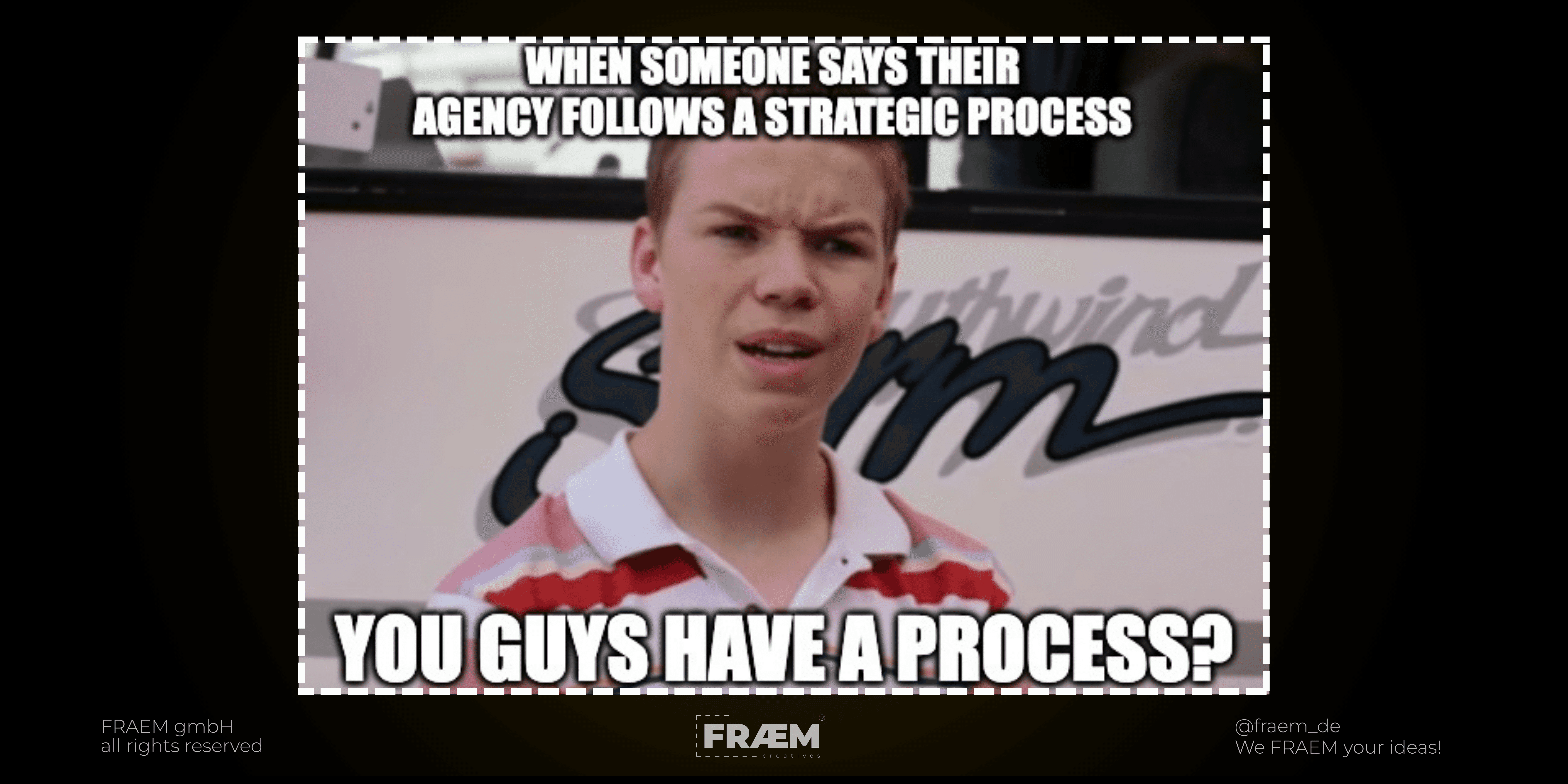
"Later" usually meant during the third round of revisions when someone in the room realized the campaign didn't connect to anything larger. Or six months post-launch when the metrics told a story nobody wanted to hear.
The FRÆMWORK came out of those experiences. Not from a whiteboard session where we brainstormed the perfect process. From real projects where we learned, sometimes the hard way, that the order matters as much as the work itself.
It's also not a rigid process we force on every project. Some brands come to us with a solid Explore phase already done. Great, we'll validate it and move to Shape. Some need a full journey from Explore to Evolve. Some start at Create because the first two phases were handled elsewhere. We adapt.
But the logic of the four phases? That doesn't change. Because it's not about following steps. It's about making sure every piece of work has the right foundation underneath it.
One more thing.
We didn't build The FRÆMWORK because we wanted a cool name for our process (although, let's be honest, FRÆMWORK is a pretty solid name). We built it because we kept seeing the same pattern: projects that started with excitement, delivered something beautiful, and then fell apart because nobody had done the unglamorous work of understanding the brand, shaping the strategy, and planning for what happens after the launch.
The FRÆMWORK is our answer to that. Four phases. One logic. Every project.
And if you're still reading this, you're probably the kind of person who cares about doing things properly. Which means we should probably talk.
Explore. Shape. Create. Evolve. Four phases, one framework, zero shortcuts.
Frequently Asked Questions!
What is The FRÆMWORK?
The FRÆMWORK is our process model at Fraem. It consists of four phases: Explore, Shape, Create, and Evolve. Each phase builds on the one before it, making sure creative work stands on a strategic foundation instead of floating in thin air.
AI Search Is Here. SEO Isn't Dead. Here's What Matters.
43% of Germans use ChatGPT. Search is quietly changing under everyone's feet. Here's what's real, what's hype, and what your business should actually do about it.

Why Your Handwerk Website Isn't Doing Its Job
94% of German Handwerk businesses have a website. Only 3 of 500 audited sites came close to actually doing their job. Here's what "it works for us" is really costing you.

Framer vs. WordPress vs. TYPO3
Framer or WordPress for your Handwerk business? An honest comparison on cost, maintenance, and SEO. Plus when Webflow or TYPO3 actually makes sense.